
Explore Articles Filed Under: The Amazon
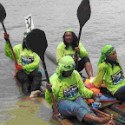
The Amazon Rafting Club, based in Iquitos, Peru, is once again hosting the Great River Amazon Raft Race. The three-day race will start in the town of Nauta on Friday, September 25, and finish in Iquitos on Sunday, September 27. Each four-person crew will paddle a raft they build themselves, the day before the race, from the balsawood logs that are provided. Each raft must use at least eight logs no less than five meters in length, and only single-bladed paddles are allowed.
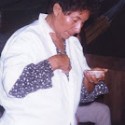
I have spoken before about my plant teacher doña María Luisa Tuesta Flores. She was born in September 1940, in the town of Lamas in the province of San Martín, and she died, the victim of sorcery, in July 2006. She had begun her healing career as an oracionista, a prayer healer, and, even after she became an ayahuasquera, her icaros, magic songs, remained inflected with the rhythms and melodies of prayers.
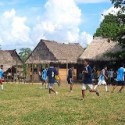
As of January 2009, for the season running from February until December, Colegio Nacional Iquitos has been promoted from the Segunda Division to the Primera Division of Peru. This is very important news. Soccer — which is, of course, fútbol — is played and followed with almost religious intensity throughout Perú. According to sociologist Julio Cotler, soccer played a major role in forging a Peruvian national identity when, in 1970, the Peruvian national team surprisingly eliminated top-ranked Argentina to qualify for the Mexico Cup. For the first time, the games were broadcast nationwide, and soccer became a national passion.
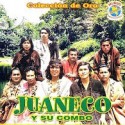
I was staying with my teacher don Rómulo Magin in his hut in the jungle. He was playing an ancient transistor radio for me, barely bringing in the scratchy music of a distant station. The music was infectiously lively, and I asked him what it was. La música de la selva, he told me, grinning. Jungle music.
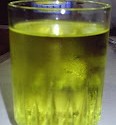
Anyone who has traveled in Peru knows about Inca Kola, the strangely phosphorescent carbonated drink that tastes like melted bubblegum. You may not know, of course, that Inca Kola has its own Facebook fan page with 2,790 fans, as well as a Facebook group, Inca Kola Lovers, with — I am not making this up — 10,475 members.
The basic political unit of traditional Amazonian society is the village, larger than an extended family, but still never larger than a few hundred inhabitants. These villages are politically autonomous entities, often widely separated, several days walk from each other. When the population of a village grows too large, a portion will split off and form its own village elsewhere in the jungle.
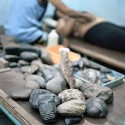
Significant among the tools used by shamans in the Upper Amazon are piedras, or piedras encantadas, magic stones, sometimes called just encantos, charms; such stones are called inkantos by the Machiguenga and Shipibo. My teacher doña María Tuesta told me that her father was a tabaquero who kept two magic stones, one male and one female, in a jar filled with a mixture of tobacco and water. When doña María was about eight years old, while her father still lived with the family, she saw him work with the stones twice. She could see the spirits of the stones: they both had very dark skin and long black hair.
In 1998, a man named Donald Topping wrote an article in the Bulletin of the Multidisciplinary Association for Psychedelic Studies entitled Ayahuasca and Cancer: One Man’s Experience. Topper was a retired professor of sociology and linguistics at the University of Hawai’i, a proponent of drug policy reform, an advocate for medical marijuana, and a founder of the Drug Policy Forum of Hawai’i. He had been diagnosed with colorectal cancer and been treated, apparently successfully, with surgery. But, in September 1996, he was told that the cancer had metastasized to his liver; the next month, the right half of his liver was surgically removed. A long-time believer in alternative medicine, he refused follow-up chemotherapy.
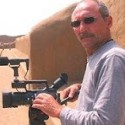
For some time, Thomas McKinnon and AyasminA — that’s her name — have been working on a still uncompleted documentary film, entitled In Search of the Divine Vegetal, about the healing power of ayahuasca. AyasminA describes the project as exploring “the nexus between Western and Indigenous cosmologies in relation to plant intelligence.” The goal, she says, is to “help nurture a species of hybrid consciousness consisting of Western science, Indigenous magic, phytospirituality, and the Great Unknown.”
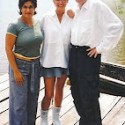
It’s actually not a bad idea for a television reality show. Get several very minor celebrities, pack them off away from their home comforts, and subject them to a range of programs that claim to enhance inner peace, happiness, and understanding. That at least was the premise of a short-lived BBC program called, naturally enough, Extreme Celebrity Detox, on which the guest celebrities performed t’ai-chi exercises in the Slovenian Alps, practiced Taoist sexual yoga in Thailand, did body-cleansing hatha yoga in the Himalayas — and drank ayahuasca in the Peruvian Amazon.
Most Popular Articles

Explore by Topic
- Ayahuasca (91)
- Books and Art (68)
- Indigenous Culture (88)
- Jungle Survival (16)
- Legal Issues (10)
- Meditation (5)
- Plant Medicine (33)
- Research Studies (31)
- Sacred Plants (74)
- Shamanism (116)
- The Amazon (90)
- The Medicine Path (28)