
Explore Articles Filed Under: The Amazon
On the planet Sarkovy, one of the many imagined by science fiction writer Jack Vance, the inhabitants, called Sarkoy, are experts in the art of killing by poison. An adept of this art is called a venefice, and it is believed that a Master Venefice can kill a victim merely by walking past him. The venefices of Sarkovy are amateurs compared to sorcerers in the Upper Amazon. Throughout the Upper Amazon, people believe that they can be made sick through ingestion of noxious substances prepared by their enemies and put surreptitiously in their food or drink — bat saliva or phlegm, the burnt bones of dead humans mixed with the entrails of water snakes, the blood of a black dog.

There has been a lot of press lately about the discovery of a previously uncontacted tribe along the Peru-Brazil border. There are pictures of a village from the air, with painted indigenes aiming their arrows at the airplane. Quaint, childlike Indians! There is a rush now to protect them, like an exotic threatened species, the way we protect the rainforest itself, for our future use.
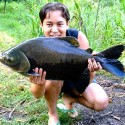
There are a number of places in the Upper Amazon which are particularly good for finding fish. Large and medium-sized rivers in low areas often form numerous meanders which, when the river changes course, become cochas, oxbow lakes. These cochas often have sediment settled on the bottom, relatively clear water, and high temperatures, and therefore rapid plant growth, which in turn supports quite large fish populations. Sometimes too you can see strips of clear and very slow water in a river. These are quiet places where plankton tends to grow; you can usually find fish downstream. You can also find fish under camalones, places where aquatic vegetation has formed a dense mat on the surface of the water. And fish love to move into the waters covering seasonally flooded forests.
There is a theme woven through the shamanisms of the Upper Amazon — that human beings in general, and shamans in particular, have powerful urges to harm other humans. The difference between a healer and a sorcerer is that the former is able to bring these urges under control, while the latter either cannot or does not want to. Thus, what distinguishes a healer from a sorcerer is self-control.

Daniel Mirante is a young — thirty years old, which is young to me — visionary artist, author, and researcher fascinated with deep ecology, shamanic traditions, ancient mythology, and the creative process. In 2000, he founded the well-known Lila website — the word lila means something like cosmic play in Sanskrit — as a creative collective and resource for people exploring what Delvin Solkinson of the Elfintome Arts Collective has called medicine culture — shamanic forms of creativity and healing, including plant-based entheogenic practices.
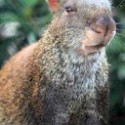
Small game is a staple in the diet of both mestizo and indigenous peoples in the Upper Amazon. Small game is generally gutted but not skinned. Once I was helping my jungle survival instructor, Gerineldo Moises Chavez, field dress an agouti — essentially a large rat. “In North America,” I said, “we generally take off the head.” He looked at me as if I was crazy. “Lots of good things in the head,” he said.
A virote was originally a crossbow bolt, brought to South America by the conquistadores. The Spanish term was then applied to the darts shot by the Indians with a blowgun. These darts were made primarily from two sources — from the spines of any of the spiny Bactris or Astrocaryum palms or from any of several Euterpe palms, whose very hard wood is used to make both bows and arrows. My jungle survival instructor, Gerineldo Moises Chavez, could whittle a usable dart from the wood of a Euterpe palm with his machete in less than a minute.
Mestizo shamanism of the Upper Amazon is closely associated with plant healing; indeed, anthropologist Françoise Barbira-Freedman speaks of vegetalismo as a syncretic mix of herbalism and shamanism. In this regard it is different from other Amazonian traditions, where shamans and herbalists occupy separate social and cultural niches. Shuar shamans, for example, have traditionally not used or prescribed plant medicine; such knowledge is widely distributed, especially among women, and herbal remedies have usually been tried before consulting a shaman in any event. Anthropologist Michael Harner, who worked with the Shuar in the 1950s and 1960s, is unequivocal: shamans, he says, never use herb remedies.
There is an often unspoken hierarchy among mestizo shamans. There is, first, a relatively informal ranking based on length of practice, the number and length of dietas, the number and types of plants that have been mastered, and the number and quality of icaros in their repertoire. Icaros become increasingly prestigious as they incorporate words from indigenous languages, unknown archaic tongues, and the languages of animals and birds; the more obscure the language, the more power it contains — and the more difficult it is to copy.
There have been relatively few investigators who have studied the healing practices of the mestizos in the Upper Amazon. All of them — anthropologist Luis Eduardo Luna, medical anthropologist Marlene Dobkin de Ríos, and Jacques Chevalier, an expert in social anthropology and political economy — have characterized the healers they worked with as shamans. And, indeed, my teachers don Roberto Acho and doña María Tuesta have been perfectly comfortable being called — and calling themselves — chamánes. This differs markedly from the attitude of many indigenous peoples in North America, who object strongly to having their traditional healers called shamans, as a term imposed from outside by the dominant culture.
Most Popular Articles

Explore by Topic
- Ayahuasca (91)
- Books and Art (68)
- Indigenous Culture (88)
- Jungle Survival (16)
- Legal Issues (10)
- Meditation (5)
- Plant Medicine (33)
- Research Studies (31)
- Sacred Plants (74)
- Shamanism (116)
- The Amazon (90)
- The Medicine Path (28)