
Explore Articles Filed Under: Books and Art
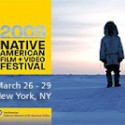
If you are going to be in New York this month, check out the 2009 Native American Film + Video Festival, running from March 26 to 29. Founded in 1979 and now celebrating its thirtieth anniversary, the festival is organized by the Film and Video Center of the National Museum of the American Indian. The festival aims to showcase the creative talents of Native American directors, producers, writers, actors, musicians, and cultural activists.
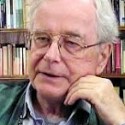
The Society for the Anthropology of Consciousness and the Association for Transpersonal Psychology jointly present a conference on Bridging Nature and Human Nature at the Edgefield Resort in Portland, Oregon. The conference is intended to create an “interdisciplinary coalition to help reassess science and culture and the interface between technology and nature” — that is, to call for a more systemic, process-oriented, intimate, and sensual understanding of the universe in which we live.
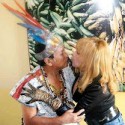
The photograph on the left shows Wilindoro Cacique, original vocalist with the famed Juaneco y su Combo, masters of cumbia amazónica, and Judith Bustos, La Tigresa del Oriente, “making click click,” as one music blog put it — “kissing each other on the mouth like teenagers” and posing very affectionately for the photographers. “Hot-blooded,” said another, enthusiastically.
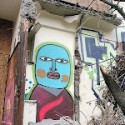
Back in November of 2007, Santiago, Chile, was the host of the first — and, sadly, never repeated — Hollyweed International Psychoactive Film Festival. The festival showcased an international selection of films related to psychoactive substances of natural origin, such as marijuana, coca, and ayahuasca. The festival was sponsored by the Spanish owners of the magazine Cañamo, or Hemp. Submissions included animations, short films, feature films. and documentaries, with prizes in each category. There were entries from Brazil, Spain, Peru, Argentina, Mexico, the United States, the Netherlands, Colombia and Chile.
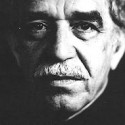
I have always enjoyed reading certain writers — Gabriel García Márquez, Leslie Marmon Silko, Isabel Allende, Italo Calvino — whose works are often grouped together as magical realism. I think I know why. The world of these writers is, in a significant way, the world of the shaman, the visionary world, in which reality is interfused with the miraculous. El realismo magical, lo real maravilloso americano, is deeply associated with the resurgent literature of South America, and is characterized by a detailed realism into which there erupts — in a way often experienced as unremarkable — the magical world of the spirits.
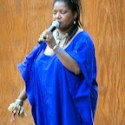
Aleah Long is an experienced session singer, vocal arranger, songwriter, and activist whose music has many roots: worldbeat new-age afro-pop trance-dance soul might be a good description. She makes frequent appearances at women’s and lesbian festivals with a number of groups she has helped form — her One World Inspirational Choir, and the theatrical performance and ritualist ensemble Evolution, which was inspired, she writes, “by the Great Mother, who beckons her daughters to call her names, embrace divine purpose and awaken to the creative healing powers, restoring balance and beauty to the Earth.”
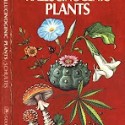
If you are as old as I am, you remember growing up with the Golden Guide books — sturdy, profusely illustrated, pocket-sized guides to such topics as flowers, planets, spiders, birds, stars, painting, pond life, photography, and rocks and minerals, intended for a young audience. They were perfect for taking along on field trips for identification purposes. The series began in 1949 with Birds and continued — remarkably — until Endangered Animals in 1995. There is, of course, a collector’s website with details about every Golden Guide ever published.
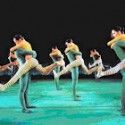
Since we’ve been talking about the Amazon River lately, I thought we might listen to some Amazon River music. The story of this particular piece brings together three significant artists — the dance company Grupo Corpo, the instrumental group Uakti, and composer Philip Glass.
I have spoken before about my plant teacher doña María Luisa Tuesta Flores. She was born in September 1940, in the town of Lamas in the province of San Martín, and she died, the victim of sorcery, in July 2006. She had begun her healing career as an oracionista, a prayer healer, and, even after she became an ayahuasquera, her icaros, magic songs, remained inflected with the rhythms and melodies of prayers.

The quirky television series Weeds was a surprise hit for Showtime. It was the channel’s highest rated series in its first year, and its fourth season premier attracted 1.3 million viewers, Showtime’s highest-ever viewership. Mary-Louise Parker, as the lead character Nancy Botwin, won a Golden Globe for her performance on the show. She also drank ayahuasca.
Most Popular Articles

Explore by Topic
- Ayahuasca (91)
- Books and Art (68)
- Indigenous Culture (88)
- Jungle Survival (16)
- Legal Issues (10)
- Meditation (5)
- Plant Medicine (33)
- Research Studies (31)
- Sacred Plants (74)
- Shamanism (116)
- The Amazon (90)
- The Medicine Path (28)