
Explore Articles Filed Under: Books and Art
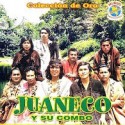
I was staying with my teacher don Rómulo Magin in his hut in the jungle. He was playing an ancient transistor radio for me, barely bringing in the scratchy music of a distant station. The music was infectiously lively, and I asked him what it was. La música de la selva, he told me, grinning. Jungle music.
Since at least the 1970s, a tenacious meme has circulated among a generally progressive youthful demographic, some of whom have now carried that meme with them into their elderhood. The meme states that there is a connection between our ecological crisis and our loss of earth-connected spirituality — a connection to both earth and spirit that we once possessed but have now lost, and which is still preserved for us by some indigenous peoples. Still, the meme says, there is hope. A spiritual awakening is coming, associated with the Age of Aquarius, or the fifth pachakuti, or the culmination of the Mayan calendar in the year 2012.
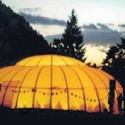
The documentary Fire on the Mountain: A Gathering of Shamans was filmed in 1997 at a ten-day gathering of tribal elders, wisdom keepers, and medicine women from five continents, who had travelled to Karma Ling, a Tibetan Buddhist retreat center in the French Alps, to discuss their concerns with the Dalai Lama and representatives of the world’s religions.
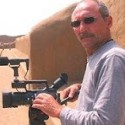
For some time, Thomas McKinnon and AyasminA — that’s her name — have been working on a still uncompleted documentary film, entitled In Search of the Divine Vegetal, about the healing power of ayahuasca. AyasminA describes the project as exploring “the nexus between Western and Indigenous cosmologies in relation to plant intelligence.” The goal, she says, is to “help nurture a species of hybrid consciousness consisting of Western science, Indigenous magic, phytospirituality, and the Great Unknown.”

It’s actually not a bad idea for a television reality show. Get several very minor celebrities, pack them off away from their home comforts, and subject them to a range of programs that claim to enhance inner peace, happiness, and understanding. That at least was the premise of a short-lived BBC program called, naturally enough, Extreme Celebrity Detox, on which the guest celebrities performed t’ai-chi exercises in the Slovenian Alps, practiced Taoist sexual yoga in Thailand, did body-cleansing hatha yoga in the Himalayas — and drank ayahuasca in the Peruvian Amazon.
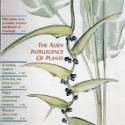
For those with an interest in sacred plants, the Fall 1989 issue of the Whole Earth Review holds a special place in our hearts. The issue is subtitled The Alien Intelligence of Plants, and it contains any number of delights — articles by Terence and Dennis McKenna; reviews of classic books on South American shamanism by Michael Taussig and Johannes Wilbert; articles on ethnobotany, plant intelligence, and the political economy of deforestation; and all of the small intriguing sidebar reviews and discussions that are characteristic of the Whole Earth style.

Photographer Vance Gellert has come back from South America with a series of striking photographs of healers and healing, currently on display at the Minneapolis Institute of Arts, in an exhibit entitled Smoke and Mirrors: A Journey to Healing Knowledge. Gellert used medium- and large-format film cameras to bring out details and vibrant colors, to evoke a spirit of place; photography, he says, captures images infused with layers of meaning and nuance that give the recorded facts a human and emotional connection.

We earlier wrote about psychopharmacologist Rick Strassman, and the dramatic end of his DMT research, which he abandoned in the face of personal pressures, family crises, and dismay at unexpected reports of encounters with alien beings. Strassman, after taking some time off to work as a weaver, has now returned to hallucinogen research, joining with toxicologist and neurochemist Steven A. Barker to found the Cottonwood Research Foundation, whose projects include developing an ultra-sensitive assay to detect naturally occurring tryptamine hallucinogens in humans, in both normal and non-normal states, and an assessment of the effects of ayahuasca in a group of normal volunteers, with the goal of developing treatment protocols in collaboration with drug abuse treatment facilities.

Artist Luc Perez has completed a new eleven-minute animation entitled Shaman, to be released as a French-Danish coproduction from Danske Tegnefilms and 24 Images. The story begins in modern Copenhagen, where Utaaq, an old Inuit, sits at a bus stop. He sees a bird from his native Greenland — rare in Denmark — and he remembers a great battle he once had with a wicked sorcerer who used a tupilak — an avenging monster fabricated out of animal parts — to kill other hunters.
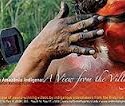
The National Museum of the American Indian — part of the Smithsonian Institution — is sponsoring a film festival with the title Vídeo Amazônia Indígena: A View from the Villages, which will showcase award-winning productions by indigenous videomakers of the Brazilian Amazon. The showcase is intended to honor the work of the independent media organization Vídeo Nas Aldeias (VNA), Video in the Villages, which for twenty years has provided video training and production support to indigenous mediamakers in the Brazilian Amazon.
Most Popular Articles

Explore by Topic
- Ayahuasca (91)
- Books and Art (68)
- Indigenous Culture (88)
- Jungle Survival (16)
- Legal Issues (10)
- Meditation (5)
- Plant Medicine (33)
- Research Studies (31)
- Sacred Plants (74)
- Shamanism (116)
- The Amazon (90)
- The Medicine Path (28)