
Explore Articles Filed Under: Indigenous Culture
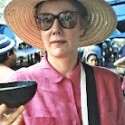
When Europeans first came to South America, they were awed by the grand civilizations of the Andes. The jungle, on the other hand, was for Europeans a place of dark and savage mystery, inhabited by primitive and ferocious warriors. Two interlocking assumptions about the Amazon have persisted to this day. The first is that the Amazon is a place of virgin wilderness, untouched by human cultivation or management; the second is that the people of the Amazon have always been — as they were found to be by twentieth-century anthropologists — small bands living by gathering, hunting, fishing, and slash-and-burn agriculture.
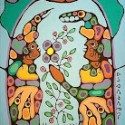
The shaking tent is a ceremony widespread among indigenous peoples of North America, during which a shaman is tightly bound within a darkened lodge, the structure shakes violently, and the shaman — and sometimes the audience as well — converses with spirits who speak and sing, and sometimes appear in various forms, such as darting blue lights. When light is restored, the shaman is revealed to be unbound and sitting comfortably, apparently untied by the spirits.
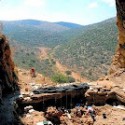
The Natufian culture flourished in the southern Levant between 15,000 and 11,600 years ago. One of the places that Natufian dead were buried is a small cave named Hilazon Tachtit, located on a steep cliff about 500 feet above the Hilazon River, with a sweeping view of the river and the Mediterranean shoreline, in which twenty-eight burials have been excavated. These burials can be dated to between 12,400 and 12,000 years ago, during the time that Natufian culture was in transition from foraging to farming.
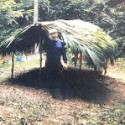
The first thing I was taught by Gerineldo Moises Chavez, my jungle survival instructor, was how to build a tambo, a jungle hut. It wasn’t fancy, as you can see, but it kept me dry when it rained and kept me off the ground while I slept. In fact, all ribereño houses are built on exactly the same principles — a thatched house on stilts, built entirely of jungle materials, which may range in size from a small temporary hunting shelter, just large enough to sleep one or a few people, to an elaborate structure able to house an extended family.

A top-level domain is the last part of an Internet domain name. The original set of these TLDs, defined in October 1984, is still the most familiar — .com, .edu, .gov, .mil, and .org, to which .net was added in the first implementation of the domain name system. Management of TLDs is in the hands of the Internet Assigned Numbers Authority (IANA), which operates under contract to the Internet Corporation for Assigned Names and Numbers (ICANN).

Northern Peru and southern Ecuador form a single culture area and share the same flora. Both are heirs of a regional plant healing tradition that goes back as far as the Cupisnique culture of the first millennium BC. But the two areas now show striking differences in plant knowledge and use. Plants used as medicine in southern Ecuador comprise only forty percent of the species used in northern Peru. Why is this?
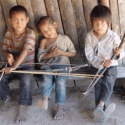
How important is traditional plant knowledge in the Amazon? According to a recent study among the Tsimane’ in Amazonian Bolivia, each standard deviation of maternal ethnobotanical knowledge increases the likelihood of good child health by more than fifty percent. And the study raises the question: What will be the cost — to the Tsimane’ and other indigenous peoples — if such ethnobotanical knowledge is lost?

The basic political unit of traditional Amazonian society is the village, larger than an extended family, but still never larger than a few hundred inhabitants. These villages are politically autonomous entities, often widely separated, several days walk from each other. When the population of a village grows too large, a portion will split off and form its own village elsewhere in the jungle.
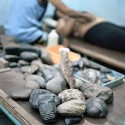
Significant among the tools used by shamans in the Upper Amazon are piedras, or piedras encantadas, magic stones, sometimes called just encantos, charms; such stones are called inkantos by the Machiguenga and Shipibo. My teacher doña María Tuesta told me that her father was a tabaquero who kept two magic stones, one male and one female, in a jar filled with a mixture of tobacco and water. When doña María was about eight years old, while her father still lived with the family, she saw him work with the stones twice. She could see the spirits of the stones: they both had very dark skin and long black hair.
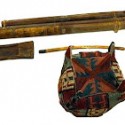
We have talked about the use of snuffing tablets and snuffing kits among the ancient Tiwanaku in the Andes, such as the elaborate kit, shown at the left, that was buried with an adult male who appeared to have snuffing lesions near his nose. A recent archeological discovery, to be published in a forthcoming issue of the Journal of Archaeological Science, now suggests that such South American snuffing devices were considered valuable heirlooms, and were carried long distances and preserved for long periods of time.
Most Popular Articles

Explore by Topic
- Ayahuasca (91)
- Books and Art (68)
- Indigenous Culture (88)
- Jungle Survival (16)
- Legal Issues (10)
- Meditation (5)
- Plant Medicine (33)
- Research Studies (31)
- Sacred Plants (74)
- Shamanism (116)
- The Amazon (90)
- The Medicine Path (28)