
Explore Articles Filed Under: Jungle Survival
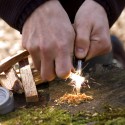
The wilderness is a teacher, and it teaches, often implacably, the natural consequences of our actions. It’s simple: if I haven’t set up a shelter and it rains, then I get wet. But the lessons of the wilderness go much deeper than that. The wilderness teaches, in Kierkegaard’s words, how to exist humanly — remembering what is important, in right relationship, in touch with meaning in the world. Here are ten such lessons that the wilderness has taught me.
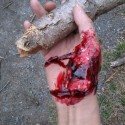
In the jungle, you might be hours away by boat from medical services that may be less than optimal for many medical emergencies. In fact, you may be days away from even an ill-equipped local medical center. Under those circumstances, it may be important to know what provisions have been made at an ayahuasca retreat center for the emergency wilderness care of foreseeable but potentially life-threatening medical emergencies.
If you have decided to travel to Peru or other areas in South America to drink ayahuasca, I hope that you have a wonderful experience and return safely to tell everyone about your adventures. But be aware that you will be traveling in third-world countries that often have limited resources, and wonderful experiences are less often the product of luck than of thoughtful preparation. Here are several things you can do to help ensure that your trip is safe and productive
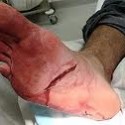
Someone carelessly tossed a machete in the bottom of the boat, your barefoot friend stepped on it, and now he has a laceration that is bleeding all over the place. Do not panic. Here are the steps to take.
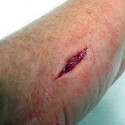
In the jungle, any open wound — abrasion, puncture, avulsion, incision, or laceration — is an invitation to infection. To understand infection, and how to tell if you have one, it is helpful to understand the normal process of wound healing, or inflammation.
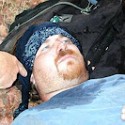
I have mentioned that the temperature in the jungle remains pretty steady at around 85 degrees and the relative humidity at about 90 percent. Although the temperature in the jungle does not get as high as it does in the desert, the high humidity prevents the rapid evaporation of sweat, which is one of the body’s primary cooling mechanisms. You can be perfectly comfortable under most jungle conditions, but you can still get heat illness if you are not careful.
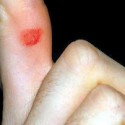
I have talked about Crotalid or pit viper envenomations. Elapids or coral snakes are different from the Crotalids in a number of significant ways. Coral snakes are generally shy and docile, and they do not attack unless deliberately provoked. Fewer than forty percent of Elapid bites result in significant envenomation. Fatalities are rare.
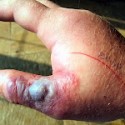
I have written about the varieties and habits of snakes in the Upper Amazon and how snakebite is treated by local healers. Remember, of course, that your chance of being bitten by a venomous snake in the Amazon is really very small, especially if you take basic precautions, such as not sticking your hand blindly into places where a snake might be sleeping. It is probably worth noting that more than fifty percent of pit viper envenomations in North America are associated with alcohol ingestion on the part of the victim.
I have mentioned before that getting clean potable water can be difficult in many parts of the Amazon, including the larger cities. In fact, I strongly recommend against drinking any untreated water in the Amazon, no matter how clear and tempting it might appear. And that includes rainwater, unless you know that the containers in which the water has been caught and stored have been properly cleaned and maintained.

We have talked before about the image of the jungle in the European imagination. Part of that mythology is that the jungle — filled with what German filmmaker Werner Herzog called “fornication and asphyxiation and choking and fighting for survival and growing and just rotting away” — has a mysterious power to drive Europeans crazy.
Most Popular Articles

Explore by Topic
- Ayahuasca (91)
- Books and Art (68)
- Indigenous Culture (88)
- Jungle Survival (16)
- Legal Issues (10)
- Meditation (5)
- Plant Medicine (33)
- Research Studies (31)
- Sacred Plants (74)
- Shamanism (116)
- The Amazon (90)
- The Medicine Path (28)
Latest Comments
Discussing the article:
Hallucinogens in AfricaDiscussing the article:
Hallucinogens in AfricaHello said:
"Hi. I’m looking to learn more about plant medicine in Kenya, and the availability as well as white shamanism having..." 16 ResponsesDiscussing the article:
Ayahuasca and CancerMarc Lazard said:
"Is it possible to comment on a piece that is nearly ten years old? I hope so, Steve. The subject speaks to me..." 18 Responses
Discussing the article:
Hallucinogens in Africa