
Explore Articles Filed Under: Research Studies
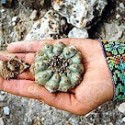
I have talked before about a 1996 study of long-time users of ayahuasca in the União do Vegetal church, which showed that drinking ayahuasca hundreds of times over decades of participation had no adverse impact on personality, and was in fact associated with significantly higher scores on measures of concentration and short-term memory. In 2005, a similar study of long-term peyote-using members of the Native American Church reported similar results.

Matthew Baggott is a graduate student in neuroscience at UC Berkeley and a research associate at California Pacific Medical Center Research Institute. He is interested in the mechanisms and effects of MDMA and hallucinogens, and in what they can tell us about the working of the brain and consciousness. His ongoing research includes measuring the cognitive, social, and emotional effects of MDMA, LSD, and methamphetamine in humans.
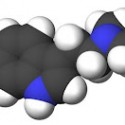
Many researchers have studied the biochemical interactions through which ayahuasca produces its psychoactive effect. The current wisdom is pretty clear. The companion plant — chacruna, sameruca, chagraponga — contains the potent hallucinogen dimethyltryptamine, and the ayahuasca vine contains ß-carboline derivatives that inhibit the monoamine oxidase-A enzyme that inactivates of the dimethyltryptamine of the companion plant. Thus the ayahuasca drink is reduced to dimethyltryptamine, its single active molecule.

Tiwanaku is an important Pre-Columbian archaeological site in western Bolivia. Tiwanaku is recognized by Andean scholars as one of the most important precursors to the Inca Empire, flourishing as the ritual and administrative capital of a major state power for approximately four hundred years between 700 and 1100 A.D. There has been good reason to believe that the inhabitants of Tiwanaku utilized an insufflated hallucinogen. They produced a variety of small carved objects that included puma and jaguar effigies, incense burners, and decorated wooden snuff tablets. Many mummies and skeletons from this culture were buried with such tablets and snuffing kits. One archaeologist reported recovering 614 snuffing kits from a single excavation.

Beware of any article published in the first issue of the first volume of a new scholarly journal. Scholars and researchers are not going to risk placing their breakthrough career-making articles in an untried journal that may, within a few issues, sink into oblivion. Rather, they often see the newly founded journal as a place to publish pieces that they had previously tossed into a drawer, in order to get the article out of the drawer and onto their curriculum vitae. I think this may be what happened with Benny Shanon’s article Biblical Entheogens: A Speculative Hypothesis, which appeared in issue one of volume one of a new journal called Time and Mind: The Journal of Archaeology, Consciousness, and Culture.
There appears to be little reason to believe that ayahuasca is either addictive or dangerous in any conventional sense. A well-publicized psychiatric study of members of the União do Vegetal, an ayahuasca-using new religious movement that originated in Brazil, showed significant differences between long-term members of the UDV who consumed ayahuasca at least two times a month in religious rituals, compared with demographically matched controls who had never consumed ayahuasca. As we have discussed, personality testing instruments showed UDV members to be more reflective, rigid, loyal, stoic, slow-tempered, frugal, orderly, and persistent, and with higher scores on measures of social desirability and emotional maturity than the controls.

Substituting other plants for the ayahuasca vine and companion plants — chacruna, sameruca, chagroponga — is part of a quest for what are called ayahuasca analogues — duplications of the ayahuasca drink “compounded with the correct percentages of DMT and beta-carbolines,” as chemist Alexander Shulgin puts it, but using materials more readily available in North America. One of the most commonly used alternative sources of β-carbolines is the plant Peganum harmala, also called Syrian rue, which grows wild in the western states, and is available in South Asian and Middle Eastern groceries under the name esfand or harmal.
The December, 2007, issue of Scientific American Mind contains an excellent article by David Jay Brown on the resurgence of psychedelic drug research over the past fifteen years. A growing number of studies using human volunteers have begun to explore the possible therapeutic benefits of drugs such as LSD, psilocybin, DMT, MDMA, ibogaine, and ketamine.
Animal testing has been widely used as a tool for hallucinogen study. Of course, it is impossible to tell when — or if — an animal is hallucinating. But it is possible to train an animal, using standard operant conditioning techniques, to recognize the effects of a given agent. In other words, a rat can be trained to press one lever to get food when under the influence of a particular hallucinogen, and a different lever to get food when it is not.
One of the primary motivations for research into hallucinogens has been the hope that it might shed light on the cause and nature of schizophrenia. Such research is largely premised on the belief that hallucinogens generally are psychotomimetic — that is, capable of producing a model psychosis, which allows researchers to study the mechanisms of psychosis in non-psychotic subjects. This assumption is worth challenging.
Most Popular Articles

Explore by Topic
- Ayahuasca (91)
- Books and Art (68)
- Indigenous Culture (88)
- Jungle Survival (16)
- Legal Issues (10)
- Meditation (5)
- Plant Medicine (33)
- Research Studies (31)
- Sacred Plants (74)
- Shamanism (116)
- The Amazon (90)
- The Medicine Path (28)