
Explore Articles Filed Under: Sacred Plants
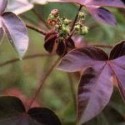
Among Amazonian mestizos, the world is often viewed in terms of male and female, macho and hembra. Not only animals but also plants — even inanimate objects — appear in both male and female forms; rain, for example, can be male or female, depending on the force with which it falls; if a plant species has two varieties, one with thorns, the one with thorns is considered male.

We earlier wrote about psychopharmacologist Rick Strassman, and the dramatic end of his DMT research, which he abandoned in the face of personal pressures, family crises, and dismay at unexpected reports of encounters with alien beings. Strassman, after taking some time off to work as a weaver, has now returned to hallucinogen research, joining with toxicologist and neurochemist Steven A. Barker to found the Cottonwood Research Foundation, whose projects include developing an ultra-sensitive assay to detect naturally occurring tryptamine hallucinogens in humans, in both normal and non-normal states, and an assessment of the effects of ayahuasca in a group of normal volunteers, with the goal of developing treatment protocols in collaboration with drug abuse treatment facilities.
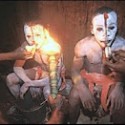
I have argued that the Upper Amazon is the center of a larger culture area uniquely characterized by the use of psychoactive plants and mushrooms in the practice of shamanism. A number of people offered the counterexample of iboga (Tabernanthe iboga) in the Bwiti religion as a shamanic use of a hallucinogen outside this extended culture area. Now, there is no question that psychoactive plants and fungi are widely used in indigenous cultures around the world. The question we are asking, however, is not whether they are used, but whether they are used by shamans for shamanizing. And that raises a number of considerations.
One of the most striking features of Amazonian mestizo shamanism is the icaro, the magic song, whispered, whistled, and sung. The shaman uses icaros to call the spirits for healing, protection, or attack, and for many other purposes as well — to control the visions of another person who has drunk ayahuasca, work love magic, call the spirits of dead shamans, control the weather, ward off snakes, visit distant planets, work sorcery.

There is a Greek word, hamartia, which is usually translated as tragic flaw, although it connotes more a cognitive than a moral failing — the lack of an important insight, a misperception, a blindness, a failure to perceive ethical and spiritual consequences. The idea of hamartia is often ironic; the very strength that makes the protagonist a hero is what brings about disaster.

We have discussed the idea, widely held in the Upper Amazon, that human beings in general, and shamans in particular, have powerful urges to harm other humans, and that the difference between a healer and a sorcerer comes down to a matter of self-control. And on that there hangs a story.
I just thought I would pass along links to two recent articles people may have missed but are worth looking at. The current issue of Scientific American has an excellent summary of recent work on the mechanisms of hallucinogens, which, using animal models, appears to locate their site of action in pyramidal neurons in layer V of the somatosensory cortex.
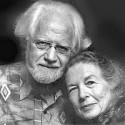
Speaking of psychopharmacologist Alexander Shulgin, the prestigious journal Scientific American has just published a remarkably positive short article on his life and work. Shulgin — familiarly known as Sasha — has always been an anomaly in the scientific community. He was a scrupulous and inventive chemist, and the creator of more than 230 psychoactive substances, most of which he tested on himself.
Ayahuasca is made from the stem of the ayahuasca vine (Banisteriopsis caapi), almost always combined with the leaves of one or more of three compañeros, companion plants — the shrub chacruna (Psychotria viridis), the closely related shrub sameruca (Psychotria carthaginensis), or a vine variously called ocoyagé, chalipanga, chagraponga, and huambisa (Diplopterys cabrerana). It is in fact the companion plant that contains the potent hallucinogen dimethyltryptamine (DMT); but, while DMT is effective when administered parenterally, it is, when taken orally, inactivated by peripheral monoamine oxidase-A (MAO-A), an enzyme found in the lining of the stomach, whose function is precisely to oxidize molecules containing an NH2 amine group, like DMT.

This blog has previously touched on what I called the war on coca leaves. There also now appears to be a war on the psychoactive plant Salvia divinorum, long used by indigenous Mazatec shamans in Mexico, and recently of interest to a wider range of users as a legal hallucinogen. At least it was legal until now. Despite the fact that the plant appears to have little potential for either abuse or addiction, and tastes awful, an increasing number of states have passed, or are considering passing, legislation to prohibit the use or possession of the plant. Florida state representative Mary Brandenburg, for example, has introduced a bill to make possession of Salvia a felony punishable by up to five years in prison.
Most Popular Articles

Explore by Topic
- Ayahuasca (91)
- Books and Art (68)
- Indigenous Culture (88)
- Jungle Survival (16)
- Legal Issues (10)
- Meditation (5)
- Plant Medicine (33)
- Research Studies (31)
- Sacred Plants (74)
- Shamanism (116)
- The Amazon (90)
- The Medicine Path (28)