
Explore Articles Filed Under: Shamanism

A while ago, I wrote about what I called the telepathy meme — the tenacious idea that ayahuasca opens telepathic communication with others in the group, or allows one to see events that are distant in time or space. This latter is, of course, consistent with the Upper Amazonian idea that ayahuasca is not itself a healer but rather a teacher, which is ingested in order to get information.
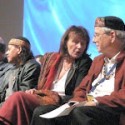
Three important conferences on shamanism were held in 2008, two of which were not easy to get to from the United States — the World Psychedelic Forum in Basel, Switzerland, March 21–24, and the Fourth Annual Amazonian Shamanism Conference in Iquitos, Peru, July 19–27. A third conference — the 25th International Conference on Shamanism and Alternative Modes of Healing — was held closer to home, in San Rafael, California, August 30–September 1. If you missed these conferences, there are still ways to access at least some of the presentations.

Significant among the tools used by shamans in the Upper Amazon are piedras, or piedras encantadas, magic stones, sometimes called just encantos, charms; such stones are called inkantos by the Machiguenga and Shipibo. My teacher doña María Tuesta told me that her father was a tabaquero who kept two magic stones, one male and one female, in a jar filled with a mixture of tobacco and water. When doña María was about eight years old, while her father still lived with the family, she saw him work with the stones twice. She could see the spirits of the stones: they both had very dark skin and long black hair.

The documentary Fire on the Mountain: A Gathering of Shamans was filmed in 1997 at a ten-day gathering of tribal elders, wisdom keepers, and medicine women from five continents, who had travelled to Karma Ling, a Tibetan Buddhist retreat center in the French Alps, to discuss their concerns with the Dalai Lama and representatives of the world’s religions.
In 1998, a man named Donald Topping wrote an article in the Bulletin of the Multidisciplinary Association for Psychedelic Studies entitled Ayahuasca and Cancer: One Man’s Experience. Topper was a retired professor of sociology and linguistics at the University of Hawai’i, a proponent of drug policy reform, an advocate for medical marijuana, and a founder of the Drug Policy Forum of Hawai’i. He had been diagnosed with colorectal cancer and been treated, apparently successfully, with surgery. But, in September 1996, he was told that the cancer had metastasized to his liver; the next month, the right half of his liver was surgically removed. A long-time believer in alternative medicine, he refused follow-up chemotherapy.
There is an ambiguity inherent in shamanic practice, where the dangerous work of healing and sorcery intersect. Because shamans possess spirit darts, and with them the power to kill, the boundary between sorcerer and shaman is indistinct. Such shamanism, says social anthropologist Carlos Fausto, “thrives on ambivalence.” In the Upper Amazon, life and death are inextricably intertwined, and the cosmos is conceptualized in terms of predator-prey relationships.
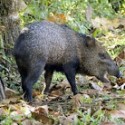
In the Amazon, plants and animals are ascribed the status of persons, who may differ corporeally from human persons but, like them, possess intentionality and agency. Indeed, other-than-human persons are believed to see themselves in human form, and thus to be self-aware of their own personhood. Among the Ashéninka, for example, a white-lipped peccary is held to perceive its own herd as a foraging human tribe, its wallow as a human village, and the wild root it eats as cultivated manioc.
Harry West is an anthropologist who currently teaches at the University of London. Back in 1994, he spent a year living with the inhabitants of the Mueda plateau in northern Mozambique, studying, among other things, their ideas about sorcery. One of the things he learned was that, when the villagers saw a lion, they often speculated that it might not be an ordinary lion, but might instead be a sorcerer who had turned into a lion, or a lion that had been created by a sorcerer, and was in either case intended to eat the flesh of the sorcerer’s enemies, either through a physical attack or by causing chronic sickness.
In the Upper Amazon, people believe that there are sorcerers, and that much of human suffering — sickness, death, misfortune, bad luck and trouble — is caused by sorcerers, either from the sorcerer’s own malevolence, or on behalf of an embittered and resentful client. There is little that the ordinary state apparatus can do about sorcery. Alejandro Tsakimp, a Shuar shaman, puts the thought this way: “They killed my father with witchcraft and not with a bullet…. With killings like this, through witchcraft, there aren’t any witnesses. I can talk about all this, I can go to lawyers, but nobody will believe me.”
Mestizo shamanism is found in an arc from southern Colombia and Ecuador to northern Bolivia, through the present-day Peruvian departamentos of Loreto and Ucayali, westward along the Río Marañon, and spilling over eastward into western Brazil. This distribution is the result of historical factors, one of which was the great Rubber Boom — a period of about thirty-five years, approximately from 1880 to 1914, which transformed Amazonian culture in ways both profound and irremediable.
Most Popular Articles

Explore by Topic
- Ayahuasca (91)
- Books and Art (68)
- Indigenous Culture (88)
- Jungle Survival (16)
- Legal Issues (10)
- Meditation (5)
- Plant Medicine (33)
- Research Studies (31)
- Sacred Plants (74)
- Shamanism (116)
- The Amazon (90)
- The Medicine Path (28)