
Explore Articles Filed Under: Shamanism

Photographer Vance Gellert has come back from South America with a series of striking photographs of healers and healing, currently on display at the Minneapolis Institute of Arts, in an exhibit entitled Smoke and Mirrors: A Journey to Healing Knowledge. Gellert used medium- and large-format film cameras to bring out details and vibrant colors, to evoke a spirit of place; photography, he says, captures images infused with layers of meaning and nuance that give the recorded facts a human and emotional connection.

On the planet Sarkovy, one of the many imagined by science fiction writer Jack Vance, the inhabitants, called Sarkoy, are experts in the art of killing by poison. An adept of this art is called a venefice, and it is believed that a Master Venefice can kill a victim merely by walking past him. The venefices of Sarkovy are amateurs compared to sorcerers in the Upper Amazon. Throughout the Upper Amazon, people believe that they can be made sick through ingestion of noxious substances prepared by their enemies and put surreptitiously in their food or drink — bat saliva or phlegm, the burnt bones of dead humans mixed with the entrails of water snakes, the blood of a black dog.
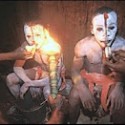
I have argued that the Upper Amazon is the center of a larger culture area uniquely characterized by the use of psychoactive plants and mushrooms in the practice of shamanism. A number of people offered the counterexample of iboga (Tabernanthe iboga) in the Bwiti religion as a shamanic use of a hallucinogen outside this extended culture area. Now, there is no question that psychoactive plants and fungi are widely used in indigenous cultures around the world. The question we are asking, however, is not whether they are used, but whether they are used by shamans for shamanizing. And that raises a number of considerations.

Artist Luc Perez has completed a new eleven-minute animation entitled Shaman, to be released as a French-Danish coproduction from Danske Tegnefilms and 24 Images. The story begins in modern Copenhagen, where Utaaq, an old Inuit, sits at a bus stop. He sees a bird from his native Greenland — rare in Denmark — and he remembers a great battle he once had with a wicked sorcerer who used a tupilak — an avenging monster fabricated out of animal parts — to kill other hunters.

The 25th Conference on Shamanism and Alternative Modes of Healing will take place on Labor Day weekend, August 30 through September 1, 2008. This annual conference was founded by the late Dr. Ruth-Inge Heinze, who died on July 20, 2007, at the age of 88. Heinze was a long-time faculty member at Saybrook Graduate School and Research Center, and was a close associate of Saybrook colleague Stanley Krippner. She also served as adjunct faculty at the University of California—Berkeley and the California Institute of Integral Studies in San Francisco. Her interests included the psychology of shamanism, shamanism in Southeast Asia, and alternative methods of healing.
One of the most striking features of Amazonian mestizo shamanism is the icaro, the magic song, whispered, whistled, and sung. The shaman uses icaros to call the spirits for healing, protection, or attack, and for many other purposes as well — to control the visions of another person who has drunk ayahuasca, work love magic, call the spirits of dead shamans, control the weather, ward off snakes, visit distant planets, work sorcery.

We have discussed the idea, widely held in the Upper Amazon, that human beings in general, and shamans in particular, have powerful urges to harm other humans, and that the difference between a healer and a sorcerer comes down to a matter of self-control. And on that there hangs a story.
There is a theme woven through the shamanisms of the Upper Amazon — that human beings in general, and shamans in particular, have powerful urges to harm other humans. The difference between a healer and a sorcerer is that the former is able to bring these urges under control, while the latter either cannot or does not want to. Thus, what distinguishes a healer from a sorcerer is self-control.

The Spring 2008 meeting of the Society for the Anthropology of Consciousness will take place at the Yale Divinity School from March 19-23, 2008. The theme of the conference, which is being co-sponsored by the Yale Divinity School’s Initiative in Religion, Science, and Technology, will be Consciousness and Spirit.
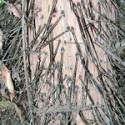
A virote was originally a crossbow bolt, brought to South America by the conquistadores. The Spanish term was then applied to the darts shot by the Indians with a blowgun. These darts were made primarily from two sources — from the spines of any of the spiny Bactris or Astrocaryum palms or from any of several Euterpe palms, whose very hard wood is used to make both bows and arrows. My jungle survival instructor, Gerineldo Moises Chavez, could whittle a usable dart from the wood of a Euterpe palm with his machete in less than a minute.
Most Popular Articles

Explore by Topic
- Ayahuasca (91)
- Books and Art (68)
- Indigenous Culture (88)
- Jungle Survival (16)
- Legal Issues (10)
- Meditation (5)
- Plant Medicine (33)
- Research Studies (31)
- Sacred Plants (74)
- Shamanism (116)
- The Amazon (90)
- The Medicine Path (28)