
Explore Articles Filed Under: Shamanism
The shaman can see things that people who are not shamans cannot. The shaman may be able to find lost objects, know where game is plentiful, discern who has cast a curse, diagnose the location or cause of an illness. Many scholars, influenced by the work of Mircea Eliade, maintain that the characteristic activity of shamanism is soul flight — celestial ascent, ecstasy, out-of-body journeys to the spirit realm, almost always vertically, upwards, toward the sky. And it is true that, among some shamanic traditions, out-of-body flight is the way that shamans acquire the information that is their stock in trade. They travel through the air and go look. Shamanism in the Upper Amazon is, I think, different.
Mestizo shamanism of the Upper Amazon is closely associated with plant healing; indeed, anthropologist Françoise Barbira-Freedman speaks of vegetalismo as a syncretic mix of herbalism and shamanism. In this regard it is different from other Amazonian traditions, where shamans and herbalists occupy separate social and cultural niches. Shuar shamans, for example, have traditionally not used or prescribed plant medicine; such knowledge is widely distributed, especially among women, and herbal remedies have usually been tried before consulting a shaman in any event. Anthropologist Michael Harner, who worked with the Shuar in the 1950s and 1960s, is unequivocal: shamans, he says, never use herb remedies.
There is an often unspoken hierarchy among mestizo shamans. There is, first, a relatively informal ranking based on length of practice, the number and length of dietas, the number and types of plants that have been mastered, and the number and quality of icaros in their repertoire. Icaros become increasingly prestigious as they incorporate words from indigenous languages, unknown archaic tongues, and the languages of animals and birds; the more obscure the language, the more power it contains — and the more difficult it is to copy.
Documentary Educational Resources produces, distributes, and promotes ethnographic and documentary films from around the world. Among their offerings is a film by Georges Payrastre and Claudine Viallon entitled Brujo (Shaman), an exploration of shamanism and curing among the Mazatec of Oaxaca, Mexico, and among two groups of Maya Indians in southern Mexico and Guatemala.
There have been relatively few investigators who have studied the healing practices of the mestizos in the Upper Amazon. All of them — anthropologist Luis Eduardo Luna, medical anthropologist Marlene Dobkin de Ríos, and Jacques Chevalier, an expert in social anthropology and political economy — have characterized the healers they worked with as shamans. And, indeed, my teachers don Roberto Acho and doña María Tuesta have been perfectly comfortable being called — and calling themselves — chamánes. This differs markedly from the attitude of many indigenous peoples in North America, who object strongly to having their traditional healers called shamans, as a term imposed from outside by the dominant culture.
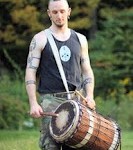
While visiting one of my favorite websites, Bioregional Animism, and its accompanying blog, I saw some striking sculpture by Martin Bridge, an artist and teacher who lives in western Massachusetts. His website shows the range of his work — sculpture, installations, drawings, paintings, theater design, book illustration. He is a mask maker and a drummer, one of the founders of the Ritual Arts Collective, and he is a second-generation art teacher, head of the Visual Art Department at Pioneer Valley Performing Arts Charter High School, where he teaches Visual Art and Theater Design and Production.
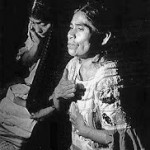
In 1955, banker R. Gordon Wasson, an amateur connoisseur of mushrooms, was introduced by the Mazatec shaman María Sabina to the ancient teonanácatl — the Psilocybe mushroom, called ‘nti-ši-tho in Mazatec, Little-One-Who-Springs-Forth. María Sabina called them her saint children. Wasson was deeply impressed by his mushroom experience. He speaks of ecstasy, the flight of the soul from the body, entering other planes of existence, floating into the Divine Presence, awe and reverence, gentleness and love, the presence of the ineffable, the presence of the Ultimate, extinction in the divine radiance. He writes that the mushroom freed his soul to soar with the speed of thought through time and space. The mushroom, he says, allowed him to know God.
In the preceding two posts, I have argued that there is little convincing evidence that shamans outside the extended culture area of the Upper Amazon have ever used hallucinogens in their shamanic work; and, in the immediately preceding post, I argued against the belief that shamans in Siberia used the fly agaraic mushroom Amanita muscaria for shamanizing. There is also, I believe, little evidence for the shamanic use of psychoactive plants or mushrooms among the indigenous peoples of North America.
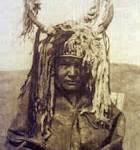
In the previous post, I claimed that hallucinogenic plants and fungi have been used in shamanism only in a particular culture area, radiating out from the Upper Amazon, primarily westward into the Andes, northward into Central America and Mexico, and eastward into Brazil. Claims to the contrary — that hallucinogen use underlies most shamanisms both diachronically and synchronically — often turn on the purported use of the hallucinogenic fly agaric mushroom Amanita muscaria by Siberian shamans.
Travel and exchange has occurred throughout the Western Amazon since long before the arrival of Europeans. What seems to the unfamiliar eye to be a vast undifferentiated landscape is in fact threaded with riverine highways navigable over long distances in dugout canoes. In addition to efficient canoe transport, indigenous people in the Amazon have always been able to cover long distances on foot, even carrying heavy loads, with remarkable speed. Anthropologists Blanca Muratorio and Michael Taussig have both provided nineteenth-century paintings and engravings that show indigenous porters carrying heavy burdens through the jungle highlands, including white men wearing frock coats and Panama hats, sitting on chairs strapped to the porter’s back.
Most Popular Articles

Explore by Topic
- Ayahuasca (91)
- Books and Art (68)
- Indigenous Culture (88)
- Jungle Survival (16)
- Legal Issues (10)
- Meditation (5)
- Plant Medicine (33)
- Research Studies (31)
- Sacred Plants (74)
- Shamanism (116)
- The Amazon (90)
- The Medicine Path (28)